
News
Jun 02, 2026 - Wind Load, Corrosion, and Why Material Choice Matters for Street Lighting Poles
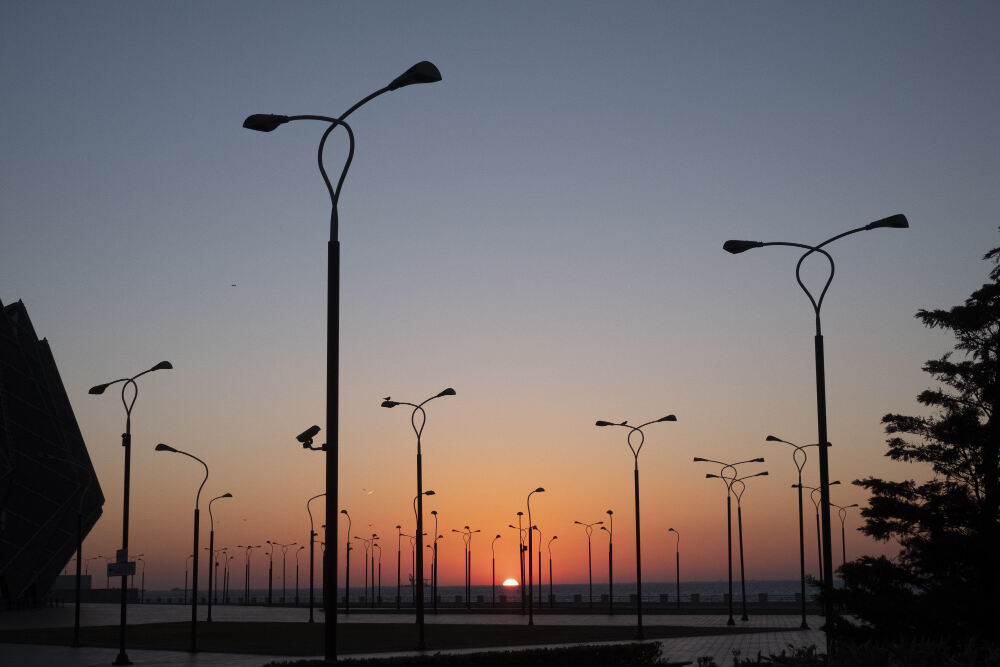
When municipalities, developers, and engineers plan outdoor lighting projects, the conversation often starts with aesthetics or cost, but the most consequential decisions involve structural performance. Street lighting poles are permanent fixtures exposed to decades of wind, moisture, temperature swings, and atmospheric contaminants. Getting the material and engineering specifications right from the start is not just a best practice; it is the difference between infrastructure that lasts and infrastructure that fails.
The physics of outdoor pole performance come down to two dominant forces: wind load and corrosion. Both are predictable and manageable, and both demand that material selection be treated as an engineering decision rather than a procurement afterthought.
Understanding Wind Load and What It Demands of a Pole
Wind load refers to the lateral force that wind exerts on a structure. For a tall and slender pole, this force creates a bending moment at the base, which is the natural point of maximum stress. As pole height increases or larger luminaires are attached, this bending moment grows stronger.
In North America, standards like AASHTO LTS (Supports for Highway Signs, Luminaires, and Traffic Signals) and ASCE 7 govern wind load requirements. These guidelines outline the specific wind speed maps, exposure categories, and load combinations that structural engineers need to satisfy. A pole installed in an open coastal environment will experience markedly different wind pressures than one located deep within a sheltered urban corridor.
Several critical elements influence how well a pole handles wind load:
-
Pole height and taper ratio: Tapered shafts distribute structural stress more efficiently than straight-wall designs.
-
Wall thickness: Thicker metal provides a higher section modulus, which directly improves resistance to bending.
-
Base plate and anchor bolt design: The transition point connecting the pole to the foundation is often the most vulnerable area during severe wind events.
-
Luminaire projected area: A large fixture is easily caught by the wind, so its drag coefficient must be factored into the overall design load.
Steel, especially high-strength low-alloy (HSLA) steel, remains the preferred material for engineered lighting structures because of its well-documented relationship between material grade and structural capacity. Working with steel allows engineers to calculate deflection, natural frequency, and fatigue life with high confidence. Achieving this same level of accuracy can be much more difficult when using alternative materials at similar heights and capacities.
Corrosion, The Silent Threat to Structural Integrity
If wind load is the acute threat, corrosion is the chronic one. Steel exposed to moisture, road salt, industrial pollutants, and UV radiation will oxidize over time. Left unmanaged, corrosion reduces wall thickness, weakens welds, and ultimately compromises the structural capacity of the pole, often invisibly, from the inside out.
The most widely used corrosion protection method for street lighting poles is hot-dip galvanization. In this process, fabricated steel is immersed in a molten zinc bath, which metallurgically bonds to the steel surface and forms a barrier that protects against oxidation. A properly galvanized pole can provide decades of corrosion resistance with minimal maintenance, even in harsh environments.
Beyond galvanization, additional protective measures include:
-
Powder coating is applied over galvanization for an aesthetic finish and added UV resistance.
-
Epoxy primers Used in highly corrosive environments such as coastal or industrial zones.
-
Stainless steel hardware, anchor bolts, hand-hole covers, and grounding lugs should be specified in corrosion-resistant alloys.
One often-overlooked vulnerability is the pole base. The zone where a pole meets the ground or where it sits on a base plate above grade is subject to moisture accumulation, road salt splash, and freeze-thaw cycling. Proper drainage holes, sealed hand-hole covers, and adequate coating thickness at the base are all details that separate a well-engineered pole from one that will require early replacement.
Why Material Grade Is Not a Commodity Decision
Not all steel performs the same way in lighting applications. Structural steel for lighting poles is commonly specified to standards such as ASTM A595 for tapered poles or ASTM A572 for straight-shaft applications, along with other project-specific requirements. Factors like yield strength, elongation, and weldability influence how a pole responds to both steady loads and repeated dynamic stresses.
Selecting lower-grade steel to reduce initial cost can lead to thicker wall sections to meet structural requirements. That added thickness may increase pole weight, foundation demands, transportation considerations, and installation costs. By comparison, the right high-strength steel grade can support a more efficient design with optimized wall thickness, reduced weight, and anchor systems suited to the application.
For street lighting poles used in demanding environments, including high-mast installations, highway interchanges, and coastal promenades, material selection should carry the same weight as height, fixture loading, and foundation design. A manufacturer with in-house engineering capability can evaluate pole geometry, steel grade, and protective coatings together, creating a coordinated solution instead of treating each specification as a separate decision.